

Here’s something that’s about to catch a lot of people off guard this tax season: your AI side hustle is making real money, and there’s a good chance nobody’s sending you a tax form for it. How to Track AI Side Hustle Income for Tax Season
Maybe you were building a simple custom GPT bot for small business owners over the weekend. Maybe you’re selling prompt packs on Gumroad, or choosing AI-assisted freelance writing gigs on Upwork. Whatever the setup, if you see your mailbox stacked with 1099s in January, you’ll probably find it’s typically empty. That’s not a loophole, and it’s definitely not a sign you’re off the hook. It’s actually a side effect of a tax law change that quietly reshuffled who gets a form and who doesn’t – and it’s tripping people up.
Quick Tax Answer
Yes, you owe taxes on your AI side hustle income even if you never get hold of a 1099. In 2026, most structures issue the simplest 1099-K when you transfer $20,000 and two hundred transactions, and clients send the most effective 1099-NEC after they paid you over $2,000 for the yr. But none of that adjusts what you actually owe the IRS. Lack of size doesn’t mean lack of benefits – it’s just that the method paper trail is now upon you.
Key Takeaways
- OBBBA reset the 1099-K limit from $20,000 to 200 transactions for 2026, and improved the 1099-NEC/1099-MISC limit from $ 600 to $2,000
- Once your internet self-employment earnings hit $400 for 12 months, you need to file it – shape or no shape.
- Self-employment tax provides 15.3% of the top of your regular earnings tax, and it applies whether or not you’re a full-time freelance enterprise going on tour or just making some hundred greenbacks a month promoting AI templates.
- The QBI deduction is now perpetual, and there is a new $400 minimum deduction for every body with at least $1,000 in certified venture earnings – although also understandable in case your party’s busy schedule is still small.
- The tools you operate to run this – ChatGPT, Midjourney, API credit, automation software program are legitimate, deductible business expenses.
Definition Box
Self-Employment Income: Net earnings derived by an individual from the continuous, regular pursuit of an independent trade, business, or freelance profession as a sole proprietor or independent contractor, governed under Internal Revenue Code (IRC) Chapter 2.
Why 2026 Changed the Rules on You
Let’s back up for a second, because the “why” here actually matters.
Why 2026 Changed the Rules
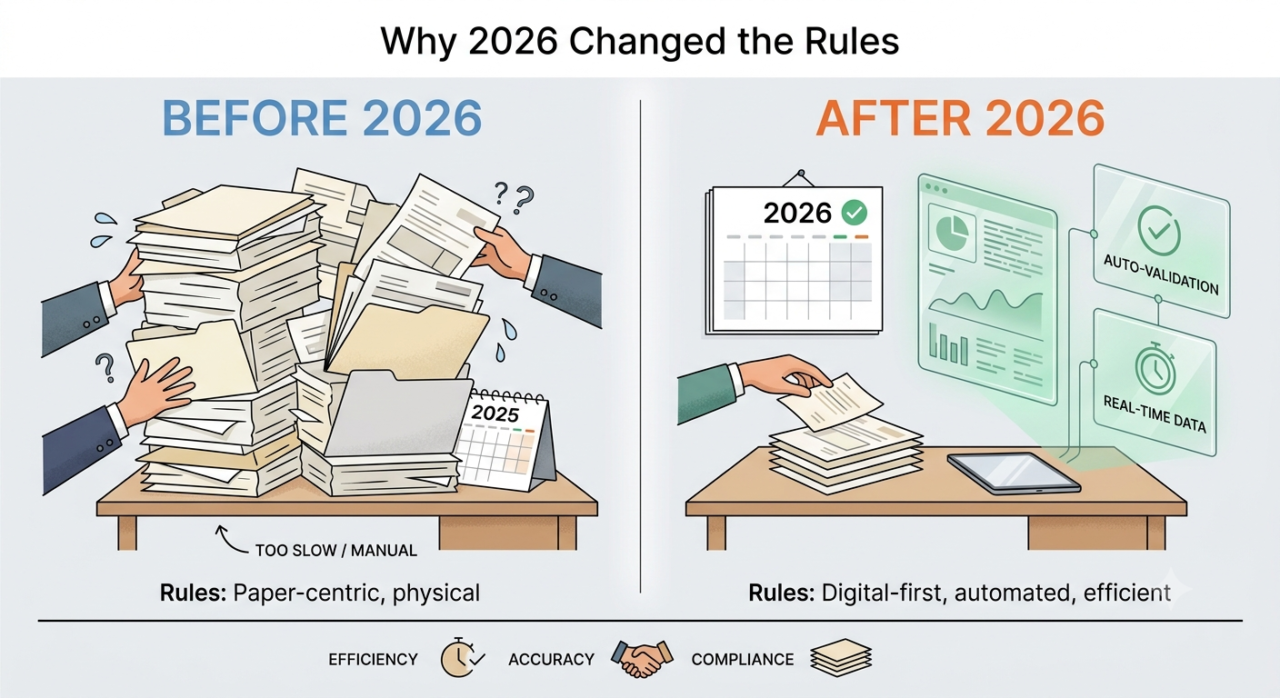
For a few years, the IRS was headed toward sending out a lot more 1099-K. The American Rescue Plan Act had set the threshold at just $600, with no minimum number of transactions required. That rule was scheduled to fully take effect in 2026, which meant if you sold $650 worth of AI-generated pintables on Etsy, you were getting a form.
Then, in July 2025, Congress reversed course with the One Big Beautiful Bill. It restored the original 1099-K limit – over $20,000 in bills *and* over 200 transactions – and made it optional retroactive. Around the same time the threshold for 1099-NEC and 1099-MISC (bureaucratic customers use to pay you directly) jumped from $600 to $2,000 for 2026 payments.
On the surface, that sounds like good news, and honestly, it kind of is. Less paperwork, fewer forms cluttering up your inbox every January. But here’s the part that’s easy to miss: A 1099 was never what made your income taxable in the first place. It’s just a form that tells the IRS what you earned. Take the form away, and the income doesn’t disappear.
It just becomes something you’re responsible for tracking and reporting yourself, with no built-in paper trail handed to you.
That distinction matters a lot more for AI side hustlers than it does for most other freelancers, simply because AI-hustle income tends to be small and scattered by nature. A $19 prompt pack sale here. A $500 custom GPT build there.
A $150 Venmo payment from a small business owner who wanted their product descriptions cleaned up. None of that comes close to the new thresholds on its own. Add it up over twelve months, though, and it’s very real income the IRS still expects to see on your return.
The Platforms Where AI Side Hustle Income Hides
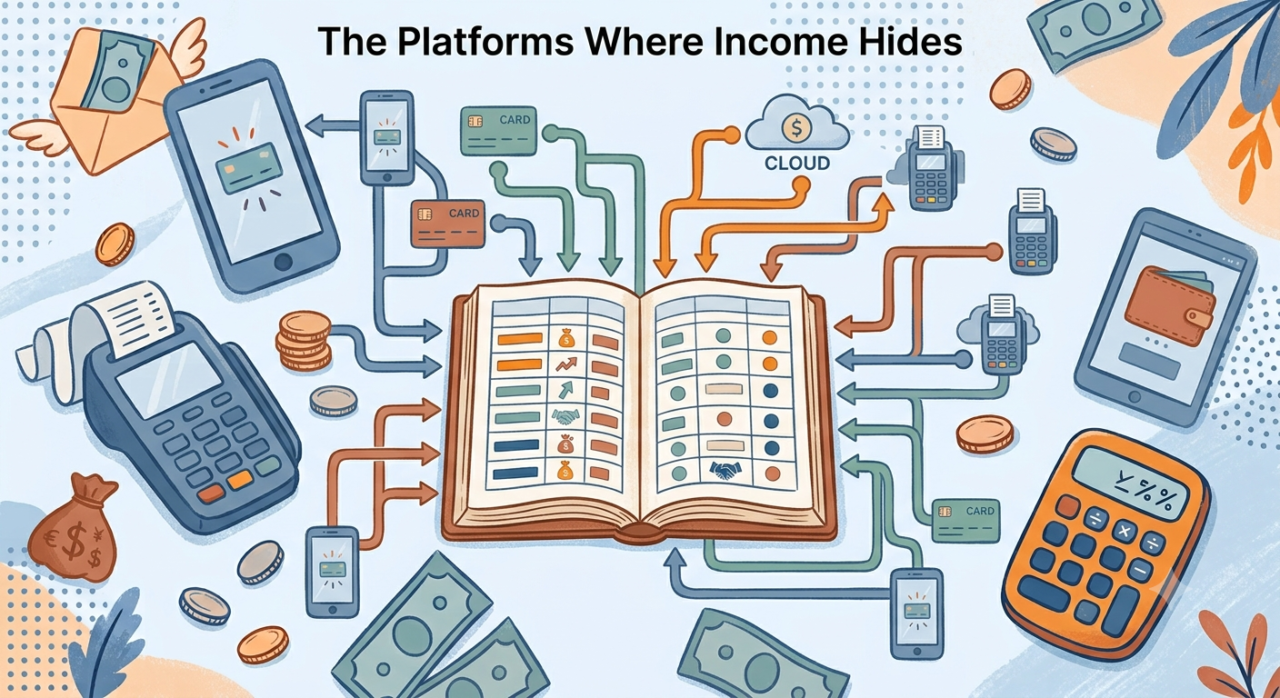
Different platforms handle tax reporting differently, so it helps to know what kind of paper trail. if any you’re actually going to get.
AI Side Hustle Income Hides
Digital product platforms like Gumroad and Etsy generally functions as third-party settlement organizations. Under the new rules, you’d need to clear $20,000 and 200-plus transactions on a single platform before it issues you a 1099-K. If you’re selling $19 prompt packs, you could rack up a few thousand dollars in sales over the year and never come close to that threshold.
Freelance marketplaces like Upwork and Fiverr work similarly for reporting purposes, so the same $20,000/200-transaction logic generally applies. Direct client relationships are a bit different a client paying you outside platform only issues a 1099-NEC once they’ve paid you more than $2,000 for the year.
Payment apps like Venmo and PayPal follow the same 1099-K threshold logic when a client is paying you for goods or services. Below $20,000 and 200 transactions, no form gets generated. Zelle is worth flagging separately here – it doesn’t operate as a third-party settlement organization the same way, so it generally doesn’t issue 1099-Ks at all, which makes Zelle payments especially easy to lose track of.
Card processors like Stripe and Square are the one real exception. Payments processed through a card have no dollar minimum at all every dollar is technically reportable. If you’re invoicing AI consulting clients through Stripe with card payments, you might actually get a 1099-K at a much lower amount than you’d expect from the TPSO rules.
The takeaway here is simple: don’t wait around to see which forms show up. Build your own income record as the money comes in, because the system you’re used to relying on is generating a lot fewer safety nets than it used to.
Read Also : How Does the New 1099-K Reporting Rule Work in 2026
Is Your AI Side Hustle a Business or a Hobby?
This question sounds academic, but it actually has real financial consequences, because the IRS treats hobby income and business income very differently – especially when it comes to what you’re allowed to deduct.
A hobby, in IRS terms, is something you do without a real intent to turn a profit. A business is something you carry on with regularity and a genuine profit motive, even if you haven’t actually turned a profit yet. If your AI side hustle gets classified as a hobby, you still have to report every dollar of income – you just lose the ability to deduct expenses against it. If it’s treated as a business, you report both income and expenses on Schedule C, and a loss in an early year can potentially offset other income on your return.
The IRS looks at things like whether you keep organized records, whether you’ve made efforts to improve profitability, and whether you’ve turned a profit in at least some years. For most people reading this selling templates on a regular basis, taking on repeat AI consulting clients, running an actual little storefront this is clearly a business. Treat it like one from the start: open a separate bank account, keep organized records, and make a genuine effort to price and market what you’re offering.
What You Actually Owe: The Real Math
Let’s put real numbers to this instead of talking in vague terms.
Say you netted $12,000 in profit this year from your AI side work, after subtracting your tool subscriptions, ad spend, and other business costs. That $12,000 gets taxed in two separate ways.
Self-employment tax covers your share of Social Security and Medicare, since there’s no employer withholding it from a paycheck. The math works out to 92.35% of your net earnings taxed at 15.3%. On $12,000, that’s roughly $11,082 × 15.3%, which comes to about $1,695 in self-employment tax alone.
Income tax then applies on top, based on your marginal bracket but you get some relief first. You can deduct half of your self-employment tax, and then the QBI deduction kicks in, knocking off up to 20% of your qualified business income for most side hustlers (or at least $400, if your qualified business income is $1,000 or more and the standard math works out to less).
Here’s what actually catches people off guard: it’s rarely the income tax portion. Most first-time side hustlers do their mental math based on their regular income tax bracket and completely forget the extra 15%-ish self-employment tax layer sitting on top of it.
A decent rule of thumb: set aside 25 to 30% of your net side hustle profit for taxes, and fine tune that number once you’ve run the real calculation or talked it through with a tax professional.
Self-employment tax limitation
Under Chapter 2 of the Internal Revenue Code, if your internet profits from self-employment reach or exceed $400, you are legally required to record a tax return using Schedule SE and pay self-employment taxes. This tax is different from the normal federal, national, and modern benefits tax, and beyond. The baseline self-employment tax rate is 15.3%, which covers Social Security (12.4%) and Medicare (2.9%).
1099-NEC vs. 1099-K Matrix
Many independent experts believe that the income is tax-relaxed in the event that they do not receive an official tax report from the client or the marketplace The quick answer is: it is not.
Form 1099-NEC: Issued with the help of groups that pay you $600 or extra for an offering provided within a 12-month calendar.
Form 1099-K: Issued through a third-party fee network (with Stripe, PayPal, or automated free marketplaces) for gross credit card or digital platform transactions.
The IRS enforces structural reporting rules for virtual charge processors on Form 1099-K. Even if your side hustle doesn’t cross the reporting thresholds required to generate an automatic 1099 form from your stage company, every unmarried greenback of gross revenue should nevertheless be an online 1 itemization of your Schedule C.
The 5-Step System for Tracking AI Side Hustle Income
The 5-Step System for Tracking
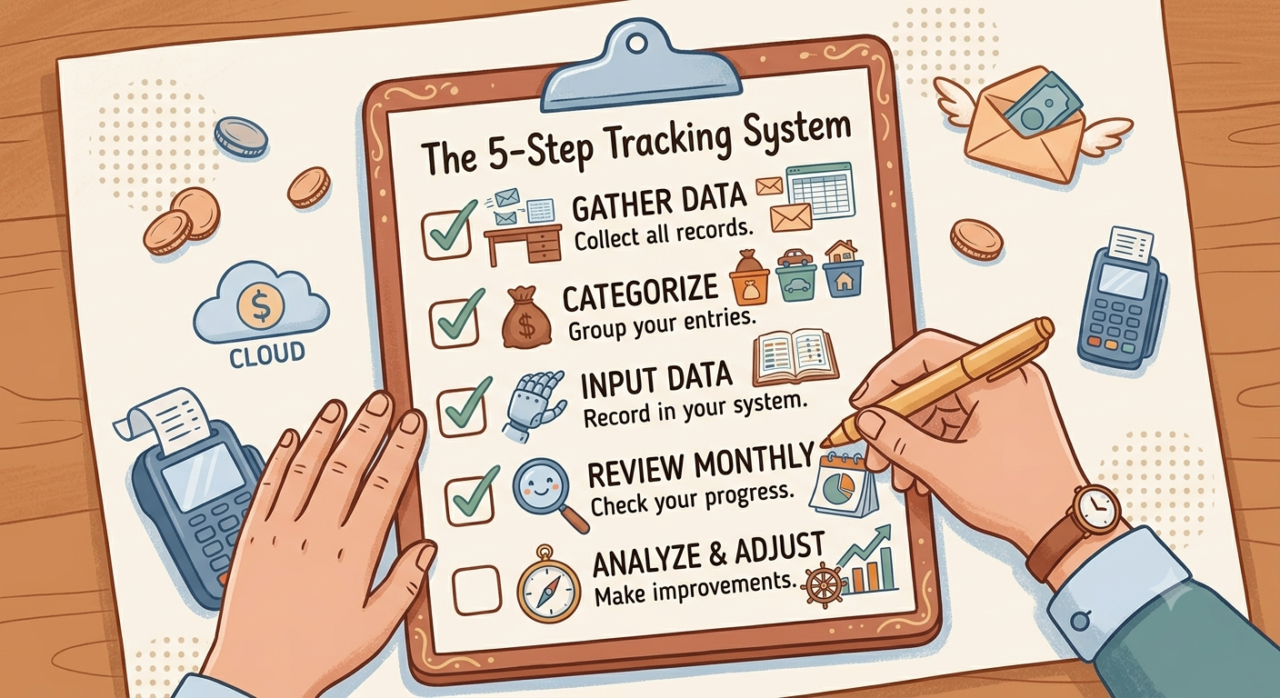
So how do you actually track income that’s scattered across five different platforms with no forms to lean on? You build the habit before tax season starts, not during it.
1. Open a dedicated account. A separate checking account, or even a free business-tier account at an online bank, keeps your AI side hustle money separate from your everyday spending, so every deposit is instantly recognizable as business income.
2. Log every payment the week it comes in. A simple spreadsheet with the date, platform, client or product, and amount takes maybe two minutes per entry. Don’t wait until year-end your memory isn’t reliable enough for this, and platform dashboards don’t always keep full historical detail easy to access.
3. Reconcile against platform dashboards once a month. Gumroad, Etsy, Upwork, and Stripe all show your full sales history right inside their dashboards. Once a month, cross-check your spreadsheet against what each platform actually shows so nothing slips through.
4. Track your expenses with the same discipline. Every AI subscription, every API bill, every piece of software you use log it the same way you log income, with the date and amount, so you’re not trying to reconstruct a full year of expenses from memory in March.
5. Set aside your tax percentage the moment you get paid. Move 25 to 30% of every payment into a separate savings account right away. This one habit does more to prevent a rough April than almost anything else on this list.
What You Can Actually Deduct
The tools that make an AI side hustle possible in the first place are, for the most part, legitimate business expenses:
What You Can Actually Deduct
- AI subscriptions you use for the work – ChatGPT Plus, Claude, Midjourney, Gemini
- API costs and usage fees for building tools or automations
- No-code platform subscriptions like Zapier, Make, or GPT Builder access
- A portion of your internet and phone bill, based on how much you actually use them for business
- Platform fees – Upwork’s service fee, Etsy’s listing and transaction fees, Gumroad’s cut
- Mileage for in-person client meetings, at 72.5 cents per mile for 2026
- A home office deduction, if you have a space used exclusively for the business
- Half of your self-employment tax
- The QBI deduction – up to 20% of qualified business income, or a minimum $400 if you have at least $1,000 in qualified business income
Common Mistakes That Cost AI Side Hustlers Money
- Assuming a missing 1099 means no tax owed. This is, by far, the most common and most expensive mistake given the 2026 threshold changes. Track your own gross income no matter what forms do or don’t show up.
- Mixing personal and business money. Running side hustle income through the same account you use for groceries and rent makes reconstructing your actual business income at tax time genuinely painful and it’s the fastest way to miss deductions.
- Skipping quarterly estimated taxes. If you expect to owe $1,000 or more for the year, the IRS wants payments spread across four quarters, not one lump sum in April. Skip this and you can trigger an underpayment penalty even if you eventually pay everything in full.
- Treating every AI subscription as automatically deductible. If you use ChatGPT Plus for both the side hustle and your personal life, only the business-use portion is deductible. Be honest about the split.
- Ignoring the hobby-loss risk. If you’re not really treating the side hustle like a business no records, no pricing strategy, no real effort to profit the IRS can disallow your deductions even if you’re reporting the income correctly.
Conclusion: Don’t Let a Quiet Tax Law Change Cost You
The 2026 threshold changes are, on the whole, a genuinely good thing. Less paperwork, fewer forms showing up in January, and a simpler filing season for millions of freelancers and side hustlers. But there’s a real cost hiding underneath that convenience: the responsibility for tracking your income has shifted from the platforms onto you, and that shift is easy to miss until it’s too late.
If there’s one thing to take away from all of this, it’s that a 1099 was never the thing that made your income taxable – it was just a convenient reminder. Now that fewer of those reminders are showing up, the habit of tracking your own money matters more than it ever has.
The good news is that fixing this doesn’t require anything complicated. You don’t need fancy accounting software or a degree in tax law. You need a dedicated account, a spreadsheet you actually update, a monthly habit of checking your platform dashboards, and a percentage of every payment set aside the moment it lands. That’s it. Build those four habits now, and by the time next tax season rolls around, you won’t be scrambling to reconstruct a year’s worth of scattered Venmo payments and Gumroad sales from memory – you’ll already have the answer sitting in a spreadsheet.
FAQs
Do I have to pay taxes on AI side hustle income if I never got a 1099?
Yes. All self-employment income is taxable and must be reported once your net earnings hit $400 for the year, whether or not you ever received a 1099-K, 1099-NEC, or any form at all.
What’s the 1099-K threshold for 2026?
Under the OBBBA, third-party settlement organizations only issue a 1099-K once you exceed $20,000 in payments and more than 200 transactions in a calendar year, per platform.
Is selling AI-generated prompts or templates considered self-employment?
If you’re doing it regularly with the intent to make a profit, yes – it’s self-employment income that belongs on Schedule C, subject to both income tax and self-employment tax.
Do I have to pay taxes on an AI side hustle if I make under $600?
Yes, you need to record all aspect-to-hand net earnings to your taxes if your total self-employment net benefit is equal to or greater than $400. The $600 threshold is the easiest to specify if the buyer or marketplace is legally required to give you a Form 1099-NEC or 1099-K problem.
What expenses can an AI content creator deduct from taxes?
AI content creators can deduct ordinary and significant commercial enterprise expenses under IRC Section 162. This includes special software program subscriptions (e.g., ChatGPT, Midjourney), computing hardware, API usage fees, net web site hosting, dedicated home worksite percentage, and net expenses used for enterprise operations.
What’s the difference between a 1099-K and a 1099-NEC?
1099-K reports payments processed through payment cards or third-party platforms like PayPal or Etsy. A 1099-NEC reports payments a client pays you directly for services, now issued only once payments exceed $2,000 for 2026.
Is my AI side hustle a hobby or a business for tax purposes?
If you’re running it with regularity, organized records, and a genuine intent to profit, the IRS generally treats it as a business, which means you can deduct expenses against the income.
What happens if I don’t report AI side hustle income?
You risk back taxes, penalties, and interest if the IRS identifies the unreported income later – through bank deposits, platform data, or other means even years down the line.







1 thought on “How to Track AI Side Hustle Income for Tax Season”