
Discover how solo mechanics and electricians can achieve Lean FIRE (Financial Independence, Retire Early) with $60,000–$85,000 in benefits. This booklet explains practical tax-saving techniques, Schedule C deductions, single 401(ok) optimizations, Section 179 write-offs, and shrewd investment strategies to help self-employed traders build an $800,000 portfolio and be in retirement in as little as 12–15 years of their lives without sacrificing quality. How to Reach Lean FIRE on a Solo Mechanic or Electrician Salary
QUICK ANSWER

A solo mechanic or electrician pulling in $60,000 to $85,000 can reach Lean FIRE (retiring on $28,000 to $36,000 a year) in 12 to 15 years. You do it by saving 45% to 50% of your income, squeezing every Schedule C tax deduction dry (Solo 401k, Section 179, HSA), and building a $700,000 to $900,000 portfolio based on the 4% Safe Withdrawal Rate.
Key Takeaways
- The Lean FIRE Target: Stashing away $750,000 to $875,000 supports $30,000 to $35,000 in yearly living costs using the 4% rule.
- The Tax Shelter Triad: Stack a Solo 401(k), Health Savings Account, and Roth IRA to shield over 40% of your trade income from Uncle Sam.
- Schedule C Optimization: Write off heavy tools, diagnostic equipment, and commercial vehicle costs with Section 179 to wipe out self-employment tax.
- Saving Your Body: Hitting Lean FIRE by age 45 or 50 saves you from getting forced out of the trade when your back or knees finally give out.
- The Low Overhead Edge: You already save thousands doing your own home, plumbing, and auto repairs. That built-in DIY skill keeps your living costs way lower then typical office workers.
What is Lean FIRE?
Lean FIRE is a simple concept. You build an invested stash equal to 25 times your basic yearly living expenses (usually under $40,000 a year for singles, or $50,000 for couples). Once you hit that mark, you can quit full-time work for good and live off your portfolio returns.
The Blue-Collar Early Retirement Reality
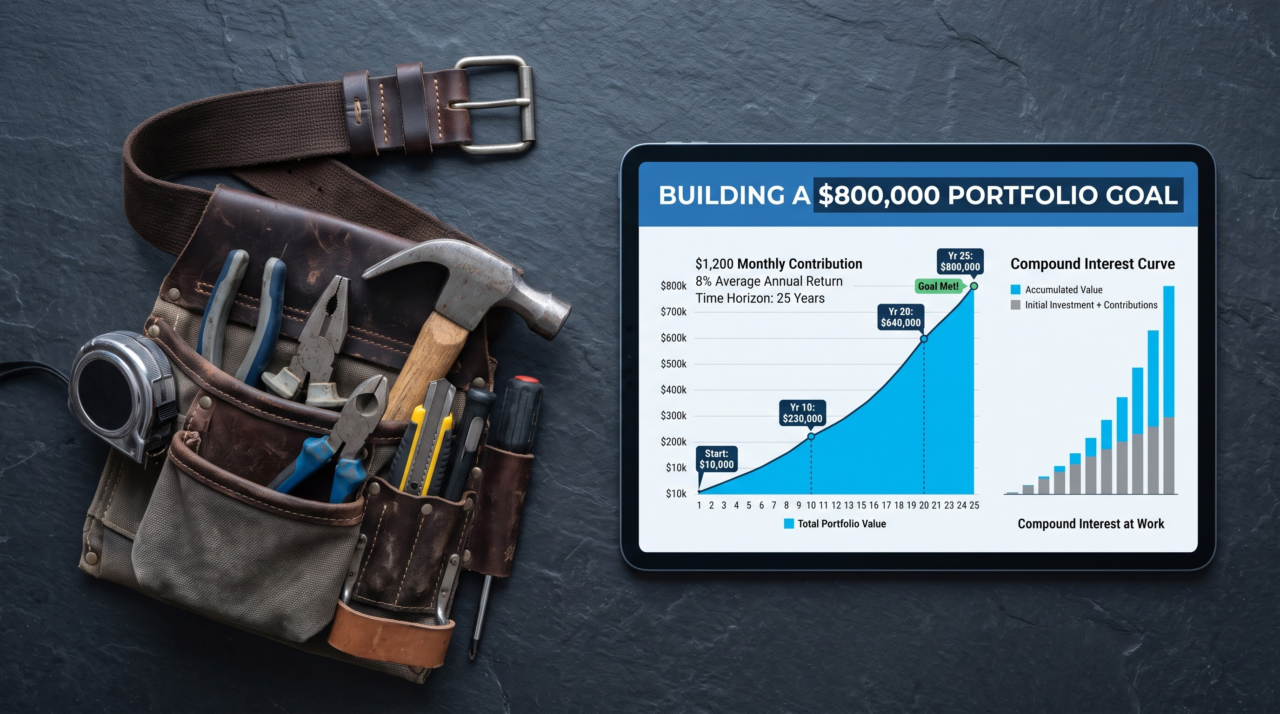
For years, mainstream money gurus wrote retirement guides strictly for tech bros making $200,000. Advice like “max out your mega-backdoor Roth, live off stock options, and ride an e-scooter to work” is completely useless if you actually work for a living.
If you’re a solo mechanic spinning wrenches in a shop, a mobile diagnostic guy, or an independent electrician running service calls out of a van, your situation is totally different.
- Your body is your money-maker: You aren’t sitting in a cubicle. Your income depends entirely on your back, knees, and hands. Physical wear and tear is real, and it usually catches up to guys between ages 42 and 52.
- Your taxes are brutal: Operating as a sole proprietor or single-member LLC means you get slammed with the 15.3% Self-Employment tax on top of regular income taxes.
- Your gear costs serious cash: Quality hand tools, diagnostic scanners, conduit benders, and van insurance take thousands of dollars upfront.
Here’s the good news: skilled tradespeople actually have a huge edge when it comes to hitting Lean FIRE fast. You control your overhead, your skills resist AI replacement, and your DIY abilities keep your daily cost of living incredibly low.
Here’s how a solo mechanic or electrician making $55,000 to $85,000 can pull this off before turning 50.
Section 1: The Lean FIRE Math ($800k Target)
To hit Lean FIRE, you gotta lock down two basic numbers:
- Your yearly baseline expenses.
- Your target portfolio total.
The 4% Rule and the 25x Multiplier
The famous Trinity Study proved that you can safely take out 4% of your starting retirement portfolio in year one, adjust that dollar amount for inflation every year after, and almost certainly never run out of cash over a 30 to 40 year retirement.
THE 25X MULTIPLIER FORMULA
Target FIRE Portfolio = Annual Living Expenses × 25
Blue-Collar Lean FIRE Expense Breakdown
Because you can handle your own car fixes, home electrical work, and general maintenance, your baseline spending is naturally lower than most people’s.
| Expense Category | Monthly Cost (Single) | Annualized Total | Tradesperson Cost Advantage Strategy |
| Housing (Paid-Off/Low Rent) | $850 | $10,200 | Self-performed electrical/plumbing repairs; lower insurance/maintenence overhead. |
| Food & Groceries | $350 | $4,200 | Meal prepping for job sites vs. buying shop takeout ($15/day savings). |
| Utilities & Communications | $250 | $3,000 | Smart home efficiency installed DIY; tax-deducted business line share. |
| Transportation (Personal) | $200 | $2,400 | Rebuilt/maintained personal vehicles DIY; zero commercial shop labor costs. |
| Health Insurance (ACA Subsidized) | $250 | $3,000 | ACA premium tax credits optimized via low MAGI in Lean FIRE phase. |
| Discretionary / Leisure / Gear | $300 | $3,600 | Local trade-swaps, outdoors, low-cost blue-collar hobbies. |
| Total Lean FIRE Baseline | $2,200 | $26,400 | Requires $660,000 Portfolio @ 4% SWR |
| Buffer / Contingency Baseline | $2,666 | $32,000 | Requires $800,000 Portfolio @ 4% SWR |
To lock in a comfortable $32,000 annual baseline (which includes a $5,600 cushion for unexpected inflation or tool replacements), your exact target is $800,000 in invested net worth.
Read Also :- Blue-Collar FIRE: Can Electricians Retire Before 50?
Section 2: Tax Strategy for Solo Mechanics & Electricians
If you’re a 1099 contractor or sole proprietor making $75,000 gross profit, taxes are your single biggest bill costing more than housing, food, and gear combined. Without planning, self-employment tax (15.3%) and federal taxes will eat up to $22,000 of your money every single year.
To reach Lean FIRE fast, you have to drop your Modified Adjusted Gross Income (MAGI) using legal, IRS-approved tax moves.
TAX REDUCTION FLOW
GROSS TRADE EARNINGS ($85,000)
↓ LESS: Schedule C Business Expenses & Section 179 Write-offs ($15k)
NET SELF-EMPLOYMENT INCOME ($70,000)
↓ LESS: Tax-Deduction Triad (Solo 401k + HSA + Health Ins.) ($27.5k)
TAXABLE INCOME REDUCED TO ~$42,500
→ Massive Federal & Self-Employment Tax Savings!
1. The Schedule C Expense Engine
Every legitimate business expense drops your net income on Schedule C dollar-for-dollar. That instantly cuts your federal income tax and your 15.3% self-employment tax.
Standard write-offs include:
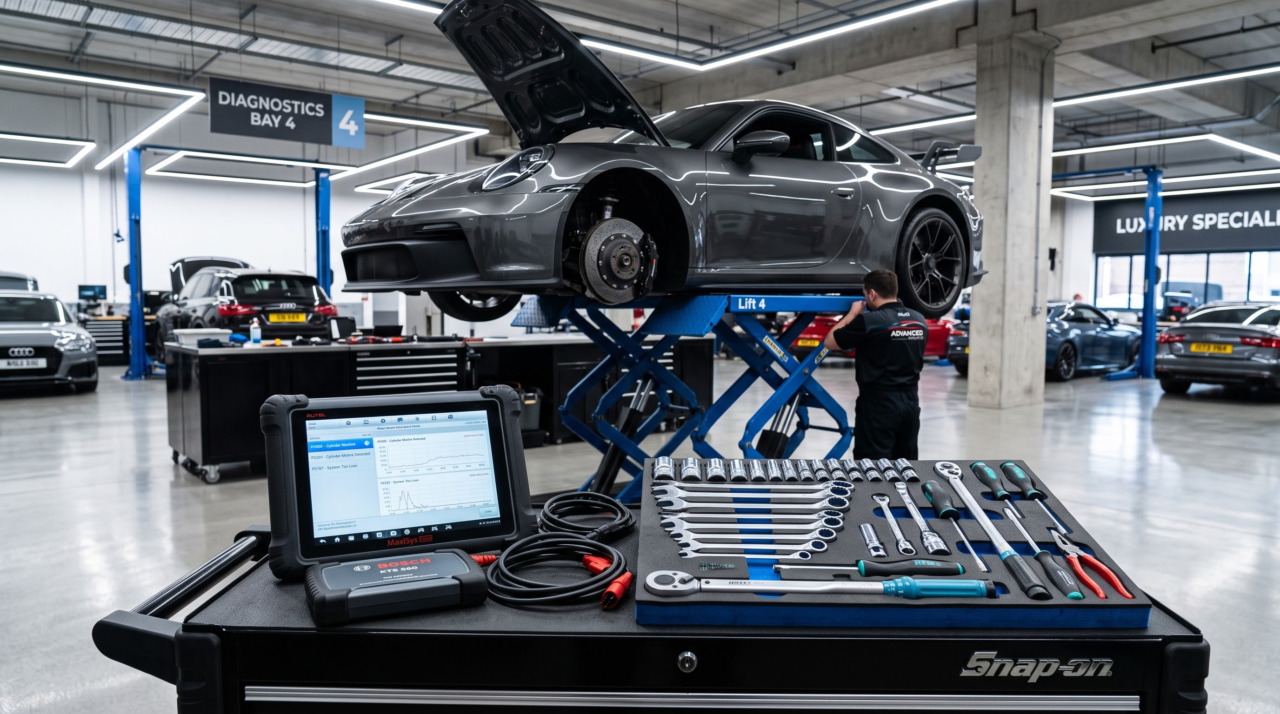
- Tool Depreciation & Section 179: Under Section 179, you can fully write off qualified business gear in the year you buy it instead of dragging the deduction out over 5 to 7 years. That covers heavy shop lifts, diagnostic scanners ($5,000+ Snap-on or Autel units), power tools, threaders, and wire pullers.
- Vehicle Expenses: You can track actual costs (gas, oil, tires, insurance, van depreciation) or use the standard IRS mileage rate. For heavy service vans carrying lots of gear, writing off actual expenses usually saves you way more money.
- Licenses, Union Dues, and Insurance: General liability insurance, master/journeyman license renewals, and trade association fees are 100% tax-deductible on Schedule C.
2. Self-Employed Health Insurance Deduction
If you show a net profit on Schedule C, you can deduct 100% of your health, dental, and qualified long-term care insurance premiums for yourself and your family. This is an above-the-line deduction on Schedule 1, which lowers your Adjusted Gross Income (AGI) right off the bat, regardless of whether you itemize.
Section 3: The Wealth-Building Blueprint

Once you trim down your Schedule C earnings, you wanna route your remaining income directly into tax-sheltered investment accounts.
1. The Custom Solo 401(k)
If you run your own trade business with no full-time employees (except maybe a spouse), the Solo 401(k) leaves a standard SEP-IRA in the dust.
- Employee Deferral: Put away up to $23,000 a year as an employee.
- Employer Profit-Sharing: Add up to another 20% of your net self-employment income as the business owner.
- Total Contribution Cap: You can pack away up to $69,000 annually into this single account.
- Roth Option: SECURE 2.0 rules now let you make employer profit-sharing contributions directly into a Roth Solo 401(k), building a massive tax-free nest egg early on.
2. Health Savings Account (HSA) The Stealth IRA
Working in the trades takes a toll on your body. Pair a High Deductible Health Plan with an HSA to get an unbeatable triple-tax break:
- Your contributions drop your taxable income dollar-for-dollar.
- Your money grows tax-free inside simple index funds.
- Withdrawals are completely tax-free for qualified medical costs at any age.
Pro tip: Pay out-of-pocket for small medical stuff like bandages or minor physicals, save your digital receipts, and leave your HSA money invested in total market index funds. After age 65, you can reimburse yourself tax-free for those decades-old receipts, or just pull cash out for non-medical expenses (which gets taxed like a standard IRA).
Section 4: Tool, Equipment, and Vehicle Write-Offs
Lots of tradespeople lose thousands of dollars every year ’cause they don’t track job-site supplies and tools correctly.
Hand Tools vs. Supplies
- De Minimis Safe Harbor Election: File a quick election statement with your tax return, and you can instantly write off any tool, safety gear, or equipment purchase that costs $2,500 or less per item on Schedule C under “Supplies” or “Tools.” No need to depreciate it over multiple years.
- Diagnostic Scanners & Heavy Lifts: For big purchases—like an $8,500 Snap-on scanner or a $12,000 two-post lift—use Form 4562 to take the Section 179 expensing. You get to deduct 100% of the cost in year one, wiping out thousands in taxable earnings on the spot.
Section 5: Real-World Trade Case Studies
Here is how two solo trade workers hit Lean FIRE in the real world using these exact steps.
Case Study 1: Marcus, Solo Automotive Diagnostic Mechanic
- Age & Location: 34 | Ohio
- Status: Sole Proprietor, Single | Gross Revenue: $92,000
- Business Expenses: $22,000
- Net Schedule C Income: $70,000
MARCUS – FINANCIAL SUMMARY
Gross Trade Revenue: $92,000
Less Schedule C Expenses: -$22,000
Net Self-Employment Income: $70,000
TAX REDUCTIONS:
– Solo 401(k) Employee Contribution: -$23,000
– Solo 401(k) Employer Profit Sharing: -$13,000
– HSA Contribution (Single): -$4,150
– Self-Employed Health Insurance: -$3,600
→ Adjusted Gross Income (AGI): $26,250!
TAXES PAID:
– Federal Income Tax: ~$1,200 | SE Tax: ~$9,890
→ Total Tax Burden: ~$11,090 (Saves $11,500+ vs unoptimized)
ANNUAL INVESTMENTS:
– Solo 401(k): $36,000 | HSA: $4,150 | Roth IRA: $7,000
→ Total Annual Investments: $47,150
Time to $800,000 Lean FIRE Target: ~11.5 Years
Marcus dropped his AGI from $70,000 all the way down to $26,250 using pre-tax Solo 401(k) deferrals and HSA contributions, which practically wiped out his federal income tax. By investing $47,150 a year at a 7% average return, he hits $812,000 in under 12 years and retires at age 45.
Case Study 2: Sarah, Independent Service Electrician
- Age & Location: 31 | North Carolina
- Status: Single-Member LLC | Gross Revenue: $105,000
- Schedule C Expenses: $25,000
- Net Income: $80,000
Sarah’s 13-Year Portfolio Growth (7% Real Return)
SARAH – PORTFOLIO TRAJECTORY
Year 01: $48,500
Year 03: $158,200
Year 05: $283,800
Year 08: $512,400
Year 10: $694,100
Year 12: $901,300 <– LEAN FIRE TARGET PASSED! ($800k Required)
Sarah keeps her personal expenses down to $28,000 a year by taking care of her own house and vehicle work. She invests around $42,000 every year into her Solo 401(k), Roth IRA, and low-cost index funds like VTI. By age 43, her portfolio crosses $901,300, allowing her to quit full-time electrical contracting to do light trade consulting 10 hours a week just for fun.
Section 6: Step-by-Step Action Plan to Reach Lean FIRE in 12 Years
If you wanna stop spinning wrenches or pulling wire for good, follow this roadmap.
Phase 1: Set Up the Basics (Months 1–6)
- Separate business and personal banking: Get a dedicated checking account and business credit card today. Mixing personal spending with trade expenses makes tax time a complete nightmare.
- Build a trade cash buffer: Keep 3 to 6 months of living and shop costs in a High-Yield Savings Account. This keeps you afloat when winter slowdowns hit.
- Get expense tracking software: Use an app like Quickbooks Self-Employed to scan every tool receipt and record mileage right off your phone.
- Open a Solo 401(k): Pick a low-cost brokerage like Fidelity, Schwab, or Vanguard and get your account set up.
Phase 2: Hyper-Accumulation (Years 1–8)
- Automate your investments: Set up auto-transfers from your business checking to your investment accounts every single Friday.
- Stick to low-cost index funds: Keep it simple. Put 80% into a Total US Stock Market index fund (like VTI or FSKAX) and 20% into an International Stock index fund (like VXUS).
- Time your tool buys: Buy big diagnostic gear or work trucks during your highest-revenue quarters so you can use Section 179 to wipe out huge chunks of tax at once.
Phase 3: The Final Stretch (Years 9–12)
- Track your growth to $800,000: Use tools like Empower or a simple spreadsheet to track your net worth.
- Scale back physical labor: Once your portfolio passes $500,000 (which generates around $20,000 a year in compounding growth on its own), stop taking emergency middle-of-the-night service calls or back-breaking jobs.
- Prep your ACA strategy: Adjust your income drawdown in retirement so you fall between 150% and 250% of the Federal Poverty Level. This lets you snag maximum ACA premium tax credits, keeping health coverage dirt cheap in early retirement.
Section 7: Pitfalls That Will Wreck Your FIRE Plan
1. The Tool Truck Debt Trap: Carrying a $10,000 balance on a Snap-on or Matco truck at 18% interest will ruin your finances. Buy clean used gear or pay cash out of your business profits for tools you actually need.
2. Financing Overpriced Trucks: Taking on an $85,000 diesel work truck with $1,200 monthly payments burns money that should of been going into your Solo 401(k). Buy reliable used vans instead.
3. Unreported Cash Earnings: The IRS loves auditing trade contractors. Record every dollar, deposit it properly, and use legitimate trade write-offs to cut your tax bill legally. Back taxes and penalties can instantly erase years of progress.
4. Ignoring Ergonomics: Skipping knee pads, lifting heavy gear without help, or ignoring eye protection leads to career-ending injuries way before your portfolio reaches your FIRE number. Protect your body first it’s your biggest money-maker.
Conclusion
Achieving financial independence as a mechanic or electrician would not require making a fortune in speculative investments or touching down a desk activity with six consciences. Changing capabilities you already possess gives you a good head start: you know the value of hard drawings, you manipulate on the enterprise, and you have genuine talents that naturally possess your costs of dwelling vulnerable.
By treating your business commercial enterprise like an economic engine-minimizing taxes through a single 401(k) and Schedule C write-off, avoiding tool truck loans, and consistently shopping index funds you can build a net worth of $800,000 in regular variable costs. Between the ages of 12 to 15, you don’t have to worry about fixing and tearing up joints or trading physical labor for a paycheck. You will have earned full manipulation in no time, your health, your freedom.
FAQs
Can an electrician or mechanic really retire early on an average trade salary?
Yes. By maintaining a 40–50% savings rate, optimizing business tax write-offs on Schedule C, and funneling net income into low-cost index funds within a Solo 401(k) and Roth IRA, a tradesperson earning $60,000–$85,000 can build an $800,000 portfolio and reach Lean FIRE within 12 to 15 years.
What is the exact FIRE number needed for a blue-collar Lean FIRE retirement?
The standard Lean FIRE portfolio target is between $700,000 and $875,000. Based on the 4% Safe Withdrawal Rate, an $800,000 portfolio generates $32,000 in annual tax-efficient living income, which easily covers living costs for tradespeople with paid-off equipment, maintained vehicles, and low lifestyle overhead.
Which retirement account is best for a self-employed mechanic or electrician?
The Solo 401(k) is the absolute best retirement account for solo trade contractors with no employees. It allows you to contribute up to $23,000 as an employee plus up to 20% of net self-employment earnings as an employer, capping at $69,000 annually (2024 limits)—far outperforming traditional SEP-IRAs or Simple IRAs.
Is a Roth IRA or Traditional IRA better for a tradesperson aiming for early retirement?
A combination of both is ideal. Prioritize pre-tax accounts (Solo 401k) during peak trade earning years to lower your immediate tax bracket. Simultaneously fund a Roth IRA, as contributions (the principal) can be withdrawn tax-and-penalty-free at any time before age 59.5 to bridge the gap in early retirement.
What is Section 179 and how does it help mechanics and electricians save money?
Section 179 is an IRS tax code provision that allows self-employed business owners to deduct 100% of the purchase price of qualifying trade equipment, machinery, diagnostic tools, and heavy vehicles in the exact year they are placed in service, rather than depreciating them over multiple years.
How can a mechanic avoid losing money on expensive tools?
Avoid financing tools through high-interest tool truck credit lines. Utilize the IRS De Minimis Safe Harbor rule to instantly deduct tool purchases under $2,500 on Schedule C. Buy quality second-hand diagnostic gear where practical, and pay cash out of a dedicated business equipment fund.