
For almost a decade, estate planning came with a deadline hanging over it. The 2017 tax law doubled how much you could pass on tax-free, but that break was set to shrink by half at the end of 2025. Advisors spent years pushing folks to act before they’d lose the exemption.
Then the deadline arrived, and nothing happened. Congress killed it in July 2025. Do I Need a Trust or Just a Will? A 2026 Guide for Middle-Class Families
So the question left standing is simpler and a lot more personal: does a family like yours actually need a trust, or will a plain old will do the job? Let’s walk through it without the lawyer-speak.
Quick Answer
Most middle-of-the-road homes require a will, and lots also benefit from agreed residents of dismissal. I have myself a will however sends your stuff through probate to the public court docket system which can consume 3% to 7% of the estate and spans from six months to 2 years. A funded life trust skips probate altogether, carries out your affairs non-publicly, and blankets you if you emerge as incompetent.
Key Takeaways
- The federal estate tax exemption is now a permanent $15 million per person ($30 million for married couples), so almost no middle-class family will ever owe federal estate tax.
- That exemption was never really the reason ordinary families needed a trust. Probate, privacy, incapacity, and owning property in more than one state are the real reasons.
- A will goes through probate; a funded revocable living trust doesn’t. Probate typically costs 3%–7% of the estate and takes 6–24 months.
- Only a will can name a guardian for minor kids. A trust can’t touch that.
- Beneficiary designations on your 401(k), IRA, and life insurance override your will, which is a brutal (and real common) mistake after a divorce.
- 17 states plus D.C. charge an estate tax, and 6 states charge an inheritance tax in 2026, with some thresholds as low as $1 million.
- More than half of American adults have no will at all, and parents of young kids are the single largest group without one (Caring.com, 2025).
What Changed in 2026 (And Why It Matters Less Than You Think)
What Changed in 2026 (And Why It Matters Less Than You Think)
The headline is that the federal estate tax exemption is now permanently $15 million per person, which means it almost certainly isn’t your problem.
The One Big Beautiful Bill Act, signed into law on 4 July 2025, rewrote IRC §2010(c)(3) to lock the exemption at $15 million for individuals and $30 million for married couples. It’ll be indexed for inflation starting in 2027, and there’s no expiration date this time. The sunset everyone was bracing for just isn’t happening.
For years, financial media treated the estate tax like the whole story. It never was, at least not for middle-class families. If your estate is under $15 million, federal estate tax simply isn’t in play.
What’s in play: what happens to your house, your accounts, and your kids the day after you’re gone. That comes down to probate and whatever documents you actually signed, not some high threshold you were never gonna hit anyways.
Will vs. Trust: What Each One Actually Does
Will vs. Trust: What Each One Actually Does
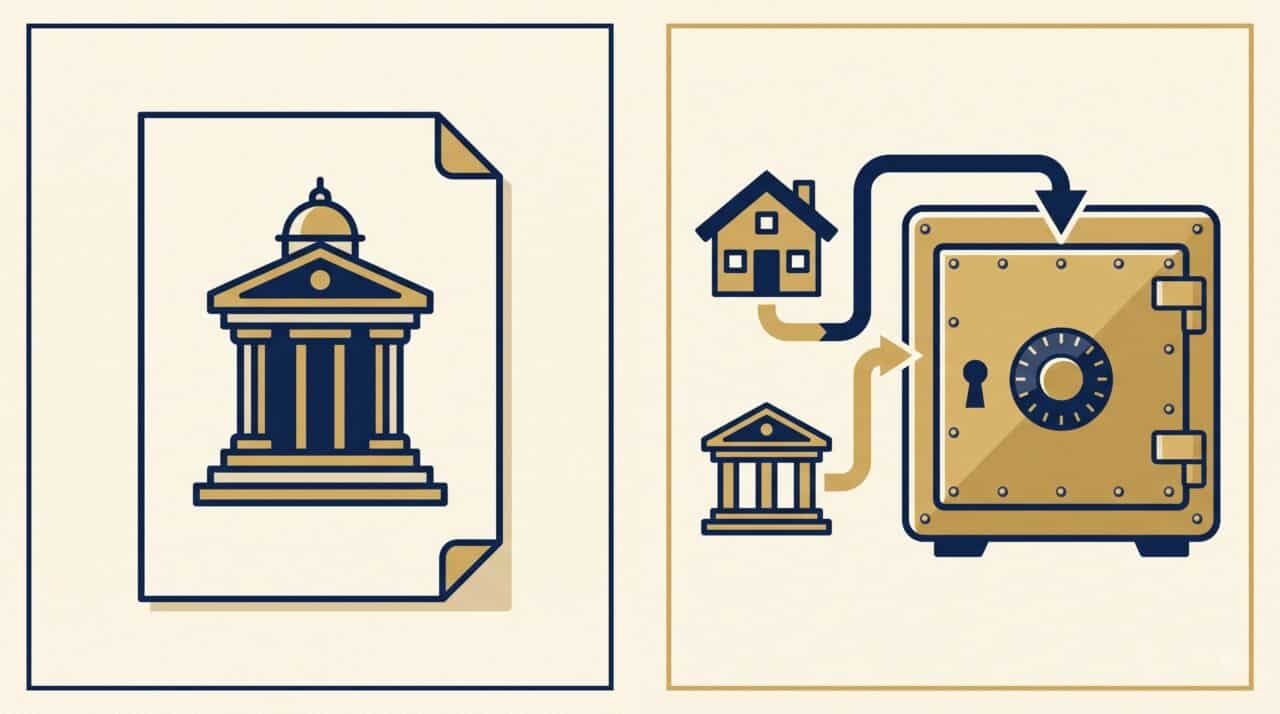
People mix these up constantly, so let’s settle it right now. A will is just a set of instructions a court reads after you die. A living trust is a container you put your assets into while you’re alive, which means no court has to get involved later. That’s really the whole distinction. Everything else follows from it.
Revocable living trust: a legal entity you set up during your lifetime to hold your assets. You fully control it and can change or cancel it anytime. When you die, a successor trustee you named hands the assets to your beneficiaries with no probate court required.
A will does three jobs: names an executor, names a guardian for minor kids, and spells out who gets what. What it doesn’t do is avoid probate. In fact, a will is the exact document probate courts use to do there work. Anything titled solely in your name still has to go through that process.
A living trust works differently. You retitle your major assets (home, bank accounts, brokerage accounts) into the trust’s name. You still control everything while you’re alive. When you die, your successor trustee distributes those assets directly to your heirs, privately, usually within weeks, with no court hearing involved.
Here’s the catch that trips people up most: a trust only avoids probate for the assets you actually moved into it. That step is called “funding” the trust, and it’s the one step people skip. An unfunded trust is just an expensive stack of paper.
Will vs. Living Trust, Side by Side
| Feature | Will | Revocable living trust |
| Avoids probate | No | Yes (for funded assets) |
| Keeps things private | No (public record) | Yes |
| Names a guardian for kids | Yes | No |
| Covers incapacity | No | Yes (via successor trustee) |
| Typical cost to create (2026) | $300–$1,500 attorney; $0–$249 online | $1,500–$5,000 attorney |
| Cost/time to settle | Probate: 3–7%, 6–24 months | Low cost, weeks, no court |
| Reduces estate tax | No | No |
Notice that last row. Neither a will nor a revocable trust reduces your estate tax. That’s a myth worth killing early, and we’ll come back to it.
What Happens If You Die Without a Will?
What Happens If You Die Without a Will?
If you die without one (legally, “intestate”), your state’s default law decides who inherits, and a judge decides who raises your minor kids. You lose your say in both.
This happens more than most people assume. According to Caring.com’s 2025 Wills & Estate Planning Study, more than half of American adults have no will at all. Only about 24% do, and 43% of the ones without one admit they just haven’t gotten around to it. Parents of young kids, ironically, are the biggest group with no plan whatsoever.
Intestacy rules vary by state, but they rarely match what people would actually choose. A common pattern: your spouse splits the estate with your children (even minor children), which can force a home sale or lock money in a court-supervised account untill the kids turn 18. If you’re unmarried with a long-term partner, that partner may inherit nothing at all.
And here’s the question every parent eventually asks: who gets my kids? Without a will naming a guardian, a judge decides, often after relatives argue about it. That one clause is arguably the single most important reason every parent needs a will.
The Real Cost of Probate, with Actual Numbers
Probate validates your will and transfers your assets. It typically runs 3% to 7% of the estate and takes 6 to 24 months. For a family that owns a home, that’s real money walking out the door.
Run the math yourself. Say your estate is a $400,000 home plus some accounts. At a blended 5%, that’s about $20,000 gone to court, executor, and attorney fees, plus a year or more before your family can touch any of it. Meanwhile, the mortgage and property taxes keep coming due.
Scale it up. A $900,000 estate (real realistic for a paid-off home in a high-cost state) loses about $45,000 at 5%. A trust that cost $3,000 to set up would of avoided nearly all of it. That’s the break-even most people never do. On any estate that includes real estate, a trust often pays for itself several times over.
Probate is also public record. Anyone can pull the file and see exactly what you owned and who got it. A trust keeps that private. If the cost, delay, or exposure bothers you, that’s your cue to look seriously at one.
Read Also :- Financial Checklist Before Filing for Divorce in 2026
So Do You Actually Need a Trust? A Simple Way to Decide

So Do You Actually Need a Trust
You almost certainly need a will regardless. You’ll likely benefit from adding a revocable living trust if you own a home, hold significant assets, own property in more than one state, or wanna get privacy and incapacity protection. Concretely:
A will alone is probably enough if you rent, have modest assets, already have beneficiaries named on your accounts, and mainly need a guardian and an executor named.
A living trust earns its cost if you own real estate, wanna spare your family probate, own property in a second state (which triggers a separate “ancillary” probate there), value privacy, or wanna plan that works during incapacity, not just after death.
The real question for most families isn’t “trust or will.” It’s “will, or will plus trust.” And even with a trust, you still need a short companion document called a pour-over will, which catches anything you forgot to move into the trust and, just as importantly, names your kids’ guardian.
The Tax Question Almost Everyone Gets Wrong
Estate tax and inheritance tax aren’t the same thing, and most middle-class families owe neither at the federal level.
Estate tax is paid by the estate before assets go out. Federally, it only kicks in above $15 million in 2026. But 17 states plus D.C. run their own estate tax with much lower thresholds, as low as $1 million in Oregon and roughly $2 million in Massachusetts (Tax Foundation, 2025). Most state estate taxes don’t transfer between spouses, so a surviving spouse can lose the unused exemption outright.
Inheritance tax is different. It’s paid by whoever receives the money. Only 6 states charge it in 2026: Iowa (phasing it out), Kentucky, Maryland, Nebraska, New Jersey, and Pennsylvania. Spouses are always exempt, but in Pennsylvania, adult children pay 4.5% on what they inherit. It’s a total surprise that ambushes families every year.
One bright spot most people don’t know about: assets you leave at death generally get a “step-up” in basis (IRC §1014). If your heirs sell the inherited home or stock soon after, they may owe little or no capital gains tax on growth that happened during your lifetime, which is a huge advantage over gifting assets while you’re alive.
The Traps That Sink Good Plans
The Traps That Sink Good Plans
The most expensive estate-planning mistakes rarely have anything to do with taxes. They’re paperwork problems. Three come up over and over again:
1. Beneficiary designations override your will. Your 401(k), IRA, and life insurance go to whoever’s named on the account form, no matter what your will says. If your ex is still listed after a divorce, your ex inherits Period. Review every designation after a marriage, divorce, birth, or death.
2. A trust doesn’t name a guardian. Only a will does. Parents who build an elaborate trust and skip the will leave the single most important decision (who raises their kids) in a judge’s hands.
3. No plan for incapacity. Death isn’t the only risk. Without a durable power of attorney and an advance healthcare directive, your family may need to go to court just to pay your bills or make medical decisions while you’re still alive. A funded trust plus those two documents closes that gap.
How to Set Up Your Estate Plan, Step by Step
You don’t need to be wealthy to build a solid plan. Here’s the process:
1. List what you own and how it’s titled: home, accounts, life insurance, retirement plans, vehicles. Note which ones already have beneficiaries attached.
2. Decide the people: your executor, your successor trustee (if you’re using a trust), a guardian for minor kids, your power-of-attorney, and your healthcare agents.
3. Choose your documents: at minimum a will, a durable power of attorney, and an advance healthcare directive. Add a revocable living trust with a pour-over will if you own real estate or wanna skip probate.
4. Create them: a reputable online service (LegalZoom, Trust & Will, Rocket Lawyer, Quicken WillMaker) works fine for simple situations. Use an estate attorney if you have a blended family, real estate in multiple states, a buisness, or a beneficiary with special needs.
5. Fund the trust and sync your beneficiaries: retitle your home and accounts into the trust, and update every beneficiary form to match. This is the step that makes or breaks the whole plan.
Revisit the whole thing every 3 to 5 years, or after any major life event: marriage, divorce, a new baby, a big new asset, or a move to a new state.
Common Mistakes, and What They Cost
- Creating a trust and never funding it. Assets still go through probate, making the trust completely pointless.
- Naming a guardian nowhere. A judge gets to decide who raises your kids.
- Leaving an ex on a beneficiary form. They legally inherit, no matter what your will says.
- Ignoring your state’s estate or inheritance tax. A $1–$2 million estate can owe state tax even when federal tax is zero.
- Skipping incapacity documents. Your family ends up in court just to manage your affairs while you’re still alive.
- Assuming a trust cuts your taxes. A revocable trust doesn’t do that.
Conclusion
Estate planning isn’t just for the wealthy. it’s mostly about protecting your family, fending off probate, and making sure your needs are taken care of Most people need a will, power of attorney, health care directives, and updated beneficiary designations. If you have personal domestic or children, then revoked residence can offer security delivered with accept the truth. The biggest mistake is procrastination. Simple estate planning plans take little time and money today but can set up your loved ones for a great deal of stress, expense and uncertainty within the future.
FAQs
What happens if I die without a will?
Your state’s intestacy law decides who inherits, often splitting assets between spouse and children in ways you wouldn’t of chosen. A court also decides who raises your minor children. You lose control over both.
Does a trust avoid estate taxes?
No. A revocable living trust doesn’t reduce or avoid estate taxes. Its job is avoiding probate, protecting privacy, and managing assets during incapacity. As of 2026, federal estate tax only applies above $15 million per person, so most families owe none regardless.
Do I need a trust or just a will?
Most people need a will at minimum. You benefit from adding a revocable living trust if you own real estate, wanna avoid probate, own property in more than one state, or want privacy and incapacity protection. Renters with modest assets often need only a will plus beneficiary designations.
How much does a living trust cost in 2026?
An attorney-drafted revocable living trust generally runs $1,500 to $5,000 depending on complexity and state. Online services can run cheaper. A simple will costs $300–$1,500 with an attorney, or under $250 through a reputable online tool.
Do beneficiary designations override my will?
Yes. Assets like 401(k)s, IRAs, and life insurance pass to whoever’s named on the account’s beneficiary form, regardless of what your will says. Update your designations after any divorce, marriage, birth, or death.
What states have an estate or inheritance tax?
In 2026, 17 states plus D.C. impose an estate tax, and 6 states (Iowa, Kentucky, Maryland, Nebraska, New Jersey, and Pennsylvania) impose an inheritance tax. State thresholds run far lower than the federal one, some as low as $1 million.