

You did not suggest creating a second software budget. It’s just gone – the ChatGPT Plus seat right here, the Claude Pro plan there, maybe a few Midjourney credits for the buyer’s mockups. Now, you can check your financial institution’s statements to see how much of that $60-a-month dependency you can actually write off on your taxes. Are AI Tool Subscriptions Tax-Deductible? A 2026 Freelancer’s Guide
Quick answer: Yes. If you are self-employed and use AI equipment in your work, the subscription or usage fee is generally deductible as a normal and required business rate under IRC Section 162. You report it on Schedule C. If you operate the equipment for enterprise-private reasons, you can most effectively deduct the commercial enterprise use component.
Key Takeaways for 2026
- Ordinary & necessary: AI subscriptions used for freelance work are deductible under the same rules as other software – common to IRC section 162.
- Subscription vs. API Time: Flat-rate subscriptions (ChatGPT Plus, Claude Pro) are deducted from paid time. Deductions are made as you cross and API credits are consumed.
- Mixed-use rules: Mixed non-public and commercial use means you must deduct fees. A 100% deduction for a non-public use account is a major audit flag.
- QBI Deduction Bonus: The 2026 Qualified Business Income (QBI) deduction, made permanent under the One Big Beautiful Bill Act, adds one more layer of financial savings to your net profits.
- No Section 179 for SaaS: Section 179 typically does not apply to SaaS subscriptions due to the fact that you do not personalize the software program; Instant miles spent, now the price has not dropped.
What exactly is “Ordinary and Necessary”

What exactly is “Ordinary and Necessary”
The IRS wouldn’t have a particular category labeled “AI Tools,” and it doesn’t want one. Software subscriptions were deductible enterprise fees for many years, and generative AI tools fall well into that current bucket.
IRS definition: Ordinary value is that it is not unusual and common on your enterprise. The most important rate is the one that is helpful and appropriate in your alternative or commercial venture, even if it is not fundamental.
For a freelance writer drafting content, a developer using GitHub Copilot, or a photo designer using Midjourney for consumer mockups, AI gear clears this bar in 2026 with ease.
Tax Authority Note: If you have studied the old online advice pointing to IRS Publication 535, notice that it has been revoked. His suggestions were folded into Publication 334 (Tax Guide for Small Businesses), the same contemporary authority you or your CPA should refer to.
Subscriptions vs. API Credits: Tax Timing Discrepancies
As freelancers increasingly transition from flat monthly subscriptions to metered API usage, the way the IRS treats these costs for timing purposes becomes critical.
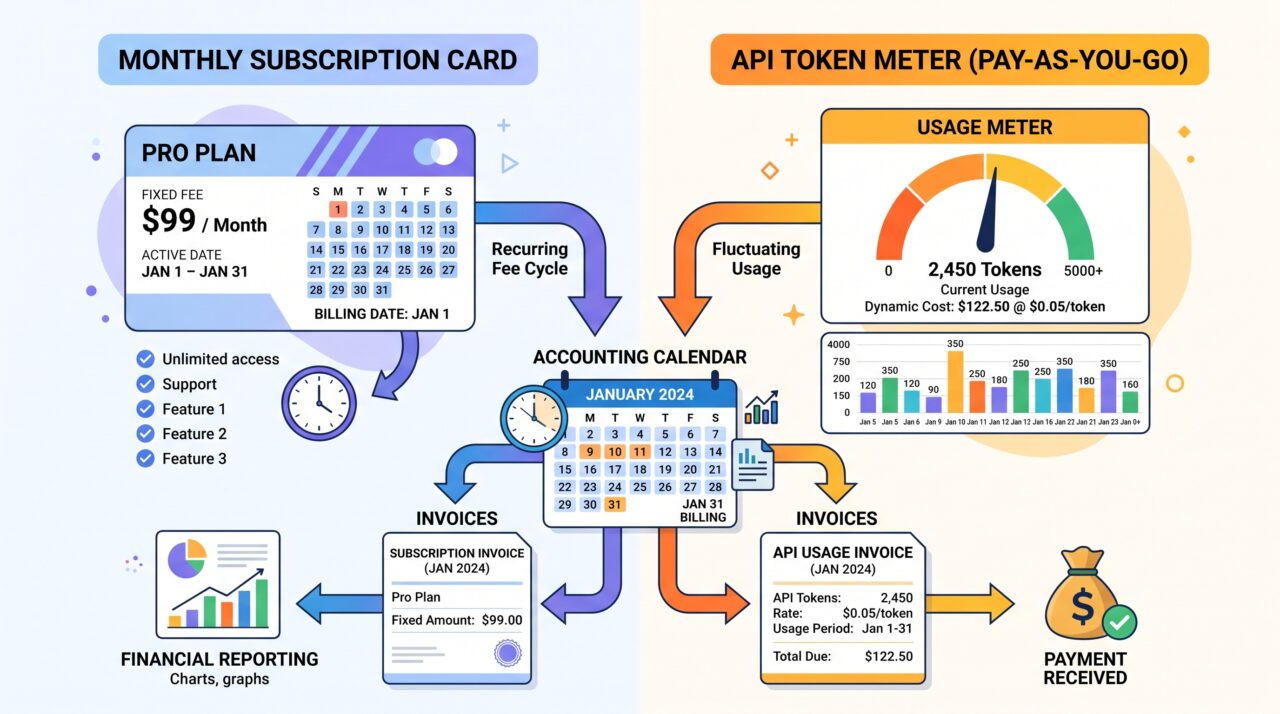
Subscriptions vs. API Credits
| Expense Type | Examples | IRS Timing Rule |
| Flat Monthly/Annual Subscription | ChatGPT Plus, Claude Pro, Midjourney Standard | Deduct in the tax year paid (for cash-basis taxpayers). |
| Pay-As-You-Go API Usage | OpenAI API, Anthropic API, Google AI API (billed by token) | Deduct in the period the actual usage occurs and is invoiced. |
| Prepaid API Credits (Small/Immaterial) | $50 – $200 prepaid credit balances | Generally expensed immediately upon purchase. |
| Prepaid API Credits (Large/Material Balance) | $1,000+ prepaid balance unused at year-end | May need to be treated as a prepaid asset and deducted as consumed. |
The 2026 Freelancer’s AI Tool Deduction List

The 2026 Freelancer’s AI Tool Deduction List
Here is a breakdown of the most common AI tools freelancers use today and how they should be treated on your books:
- ChatGPT Plus / Team / Enterprise: Fully deductible if used exclusively for business; apply a percentage split if it’s a mixed-use account.
- Claude Pro / Team: Deductible based on your business-use percentage; track as a standard software subscription.
- Midjourney: Fully write-offable for designers, marketers, and creators generating client visuals. Personal art projects do not qualify.
- GitHub Copilot: Standard software subscription deduction for developers billing clients or programming commercial products.
- OpenAI / Anthropic / Google API Credits: Deductible under pay-as-you-move framework. Keep month-to-month usage invoices on hand.
- Jasper, Copy.Ai, and AI Writing Tools: Deductible when used to supply advertising copy, patronizing material, or enterprise collateral.
- ElevenLabs & AI Audio Tools: Podcasters, video editors, and voice freelancers who use them for professional work have the cut.
- Runway, Pika, & AI Video Tools: Valid deduction for creators and editors producing monetized or client-facing video content.
- Zapier AI / Make.com Workflows: Deductible as an automated business operation and software expense.
- Perplexity Pro & AI Research Engines: Deductible when applying for market research, customer projects, or statistical verification.
- AI Bookkeeping Assistants (e.g., QuickBooks AI, Keeper): Write this under bookkeeping, accounting, or specialist software program expenses.
Documentation Tip: Save every virtual receipt. If a device charges you month-to-month, maintain a simple spreadsheet log indicating which consumer or enterprise supported that month to back up your announcement throughout the inquiry.
Mixed Personal and Business Use: How to Safely Split the Bill
If you use the same ChatGPT account to write client proposals and plan your family vacation, you can still claim a deduction-but you must calculate a reasonable business-use percentage. The IRS doesn’t expect you to run a stopwatch; a good- faith, documented estimate is common widespread practice.
Check out those strategies to simplify your tracking:
● Maintain separate accounts: Upgrading to a business level fully committed to patron tasks (such as ChatGPT Team or Claude for Teams) allows 100% of the cost to be cleanly written with no allocation calculations.
● Track and estimate: If it stays in one account, establish a utilization ratio. For example, if you use the machine for customer obligations less than 4 days a week and private work 1 day a week, you can justify an 80% commercial and enterprise use deduction
Read Also :- How to Claim Federal Tax Exemption on Overtime Pay
Step-by-Step Guide: How Do I Claim AI Tool Subscriptions on Schedule C?

AI Tool Subscriptions on Schedule C
When you are equipped to report your annual returns, you should translate your spreadsheet facts into the required reliable format with the help of the IRS. Follow this clean, sequential workflow to file your AI subscription expenses:
1. Consolidate your digital invoices: Collect all year-end statements from OpenAI, Anthropic, Midjourney, or different applicable systems. Make sure each invoice displays the company call or your character call as the sole owner.
2. Set aside your total: Set aside 100% commercial software program fees for dual-use properties. Run the Business Allocation Formula for any shared platform bill.
3. Determine the appropriate form: As a fair contractor, independent, or Single-member LLC, you will document those figures on Schedule C (Form 1040), profit or loss from the business.
4. Map the line items:
– Place the comprehensive SaaS application (such as Claude Pro, ChatGPT, or Otter.Ai) in Part II, Line 18 (Office Expenses).
– Alternatively, you can organize special month-to-month API compute fees or high-volume token distributions under Part II, Line 27a (Other Expenses) If you use Line 27a, write a clean statement in Part V of the form, with “Cloud Computing and API Token Subscriptions”.
5. Calculate net income: Subtract your general math fees from your gross receipts to get your internet benefit on line 31. This number flows through to Schedule SE without delay to determine your employment tax liability.
How the 2026 QBI Deduction Multiplies Your Savings
Deducting your business software doesn’t just cut your immediate tax liability—it fundamentally shifts your calculation for the Qualified Business Income (QBI) Deduction.
Passed into law via the One Big Beautiful Bill Act on July 4, 2025, the 20% QBI deduction was made permanent. Starting in 2026, the block-end threshold title for joint filers was increased to $150,000 ($75000 for single taxpayers). Importantly, the new minimum QBI deduction of $400 now applies to any taxpayer who has at least $1,000 of qualified enterprise income from a live exchange or commercial enterprise.
By cleanly writing off all permissible AI expenses, you keep your net profit numbers precise, ensuring you maximize this powerful 20% deduction structure.
What mistakes should I avoid when deducting AI platforms on my taxes?

IRS Audit Magnifying Glass
The IRS has significantly enhanced its data analytics capabilities, using automated processingsystems to identify outliers on Schedule C filings. To ensure your tax deductions stand up to scrutiny, avoid these common compliance pitfalls:
Deducting W2 Employment Tools: If you are a traditional W2 employee and buy ChatGPT Plus to help with your corporate job, you cannot deduct it. Following the Tax Cuts and Jobs Act (TCJA) updates, unreimbursed employee expenses are completely non-deductible for W2 workers.
The “Vague Software” Trap: Never lump all your tech expenses under a generic heading without supporting documentation. Labeling a large expense simply as “Miscellaneous Software” can flag your return for manual verification.
Mixing Up Software and Hardware Assets: Do not mix cloud subscription costs with physical hardware purchases. Buying a $2,500 desktop computer containing an advanced Nvidia graphics card to run local models is a capital expenditure. It must be written off using specialized rules like Section 179 expensing, rather than hiding it on Line 18 as a basic software subscription.
Failing to Keep Digital Receipts: Bank statements alone are rarely enough during an audit. If the IRS requests verification, a line item showing a payment to “OpenAI” does not prove the purchase was for business. You must retain the accompanying digital receipt showing the subscription type and account tier.
Common Pitfalls That Trigger Tax Audits
- Claiming 100% on Personal Accounts: Writing off an entire subscription when it’s actively used for hobbies or personal tasks is an easy way to draw IRS scrutiny.
- Lacking a Usage Log: If you are audited, an undocumented estimate won’t stand up. Keep a brief monthly note or spreadsheet tab showing your business utilization.
- Forgetting Small Add-ons: Small $5–$10 monthly utility tools might seem negligible, but skipping them means leaving hundreds of dollars in cumulative legal write-offs on the table.
- Misapplying Section 179: Do not try to depreciate your SaaS tools under Section 179. They are off-the-shelf software subscriptions that should be expensed fully in the tax year paid.
Your Step-by-Step Action Plan
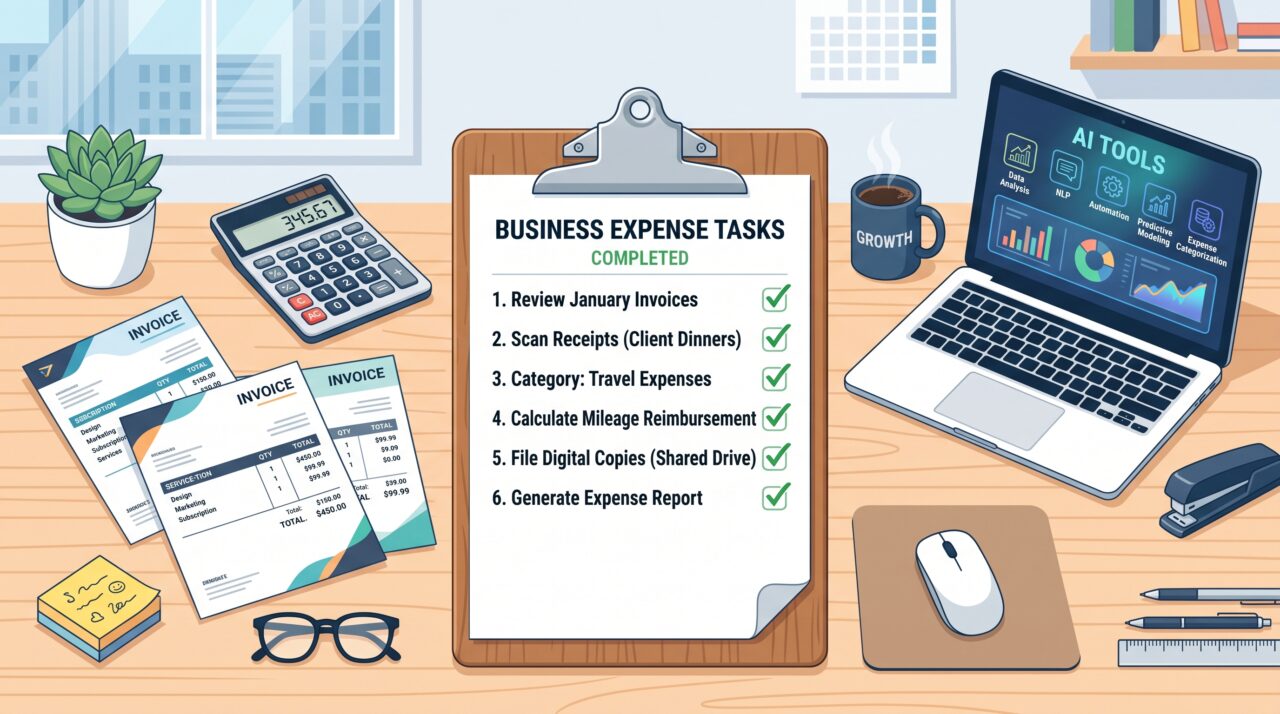
- Compile a complete list of every AI tool, platform, and API credit score stability to purchase in the tax Year.
- Classify each item as 100% trade, mixed-use, or 100% individual (immediately drop individual items).
- Calculate and observe the enterprise usage percentage documented on your mixed-use appliances.
- Export your official invoices or billing histories directly from each provider’s settings panel.
- Tally your finalized deductible total and input it under Office Expenses or Other Expenses on Schedule C, or provide it cleanly to your CPA.
- Archive your digital receipts and running logs for at least three years to secure your deduction against future IRS lookbacks.
Conclusion
In 2026, AI tools are the structural backbone of independent revenue technology, not superficial innovations. Leaving these ordinary membership expenses out of your Schedule C means unnecessarily inflating your tax invoices while missing out on legitimate profit margins. However, competitive optimization requires strict compliance. Using superior fact analysis to flag anomalies with the IRS, establishing an airtight audit trail through smooth account segregation, specific pair-of-use allocations, and virtual receipt tracking is essential Treat your tech stack like an investment portfolio: maximize your prison deductions, . Drop audit hazards, and funnel those tax savings directly into your financial freedom engine.
FAQs
Can I write off my ChatGPT Plus subscription as a freelancer?
Pretty much, yeah. If you’re actually using it for client work – drafting emails, outlining content, brainstorming ideas for a project – that $20 a month counts as a business expense, same as any other software subscription. The only catch is if you’re also using that same account to plan your grocery list and chat about your weekend. In that case you’re not writing off the whole thing, just the slice that’s actually work.
Do I need a receipt for my $20/month AI subscription?
Technically yes, but don’t overthink it. You don’t need a filing cabinet for this – a saved invoice, an email receipt, or even just the line item on your credit card statement is enough. The habit that actually matters is doing it every month instead of trying to reconstruct a year’s worth of subscriptions in April.
What Schedule C line do software subscriptions go on?
Most people put it under Line 18, “Office Expense,” or list it separately under “Other Expenses” further down the form. There’s no special IRS box for software – it’s just been living in one of those two spots for years. Honestly, exact line items are a lot less than choosing one and sticking with it every yr so it looks regular for you to go back.
What Schedule C line do AI software subscriptions go on?
Most freelancers report them under Line 18 (Office Expense) or as a labeled entry under Part V, Other Expenses. Consistency year to year matters more than which specific line you choose.
Does the 2026 QBI deduction apply on top of my AI tool deductions?
Yes. Deducting business expenses like AI subscriptions lowers your net business income, which is the figure the QBI deduction is calculated from — so accurate expense tracking increases the value of both deductions.
Are API credits deducted differently than memberships?
Typically, pay-as-you-move API usage is cut because it feeds, at the same time as flat subscriptions are cut when paid. For most freelancers, the annual end result is the same either way.
What’s the most important mistake freelancers make with AI tool cuts?
Claiming 100% commercial and enterprise use on an account is actually used for each image and personal existence, with no documentation to guide the cut-up.
Is Midjourney a business expense for a graphic designer?
If you’re generating concepts, mockups, or client-facing visuals with it, absolutely – that’s about as clean a business expense as it gets for a designer. Where it gets murky is if you’re also using it to make birthday cards for your family or fun art on the side. That personal-use slice doesn’t count, so it’s worth being honest with yourself about the split if the account’s doing double duty.






1 thought on “Are AI Tool Subscriptions Tax-Deductible? A 2026 Freelancer’s Guide”