

You’ve probably seen the headline: “No Tax on Overtime”. Maybe you finished the you and clocked extra hours and started doing some intellectual math on what your refund could look like this time. Here’s the thing, though: before you get too excited, you need to understand precisely who this cut is actually made for. And if you drive for a rideshare app, deliver food for a living, or freelance full time, the solution won’t be what you’re hoping to focus on. How to Claim Federal Tax Exemption on Overtime Pay
Quick Answer

With the new federal “No Tax on Overtime” deduction, created through the One Big Beautiful Bill Act, we allow eligible W-2 employees to deduct up to $12,500 ($25,000 if married while filing collectively) of time they earned between 2025 and 2028. The Fair Labor Standards Act. Independent contractors and a maximum of 1099 workers no longer qualify.
Key Takeaways
- The deduction most effectively covers “half” and a half of the time beyond regular time pay — not your entire paycheck beyond regular time.
- The largest deductions are $12,500 for single filers and $25,000 for married couples filing reciprocally, for tax years 2025 through 2028.
- This is phased out as soon as your modified adjusted gross profit crosses $150,000 (single) or $300,000 (combined).
- Independent contractors and gig workers are almost in no way eligible, as 1099 drawings do not blanket through FLSA time beyond regulation guidelines.
- If you have a W-2 job and a side hustles, your W-2 overtime can still qualify — your gig income just won’t.
- Married couples have to file jointly to claim it. Filing separately wipes out the deduction completely.
Let’s get one thing out of the way first, because it matters: “No Tax on Overtime” isn’t really a description of what the law does. It’s a nickname. What it actually creates is a temporary federal income tax deduction – authorized under a new section of the tax code, IRC Section 225 – that lets eligible non-exempt employees deduct the FLSA-required overtime premium (generally that extra “half” of time-and-a-half) from their taxable income for 2025 through 2028. It’s a deduction, not a tax-free paycheck, and that distinction is going to matter a lot as we go through this.
Do You Qualify? Start Here
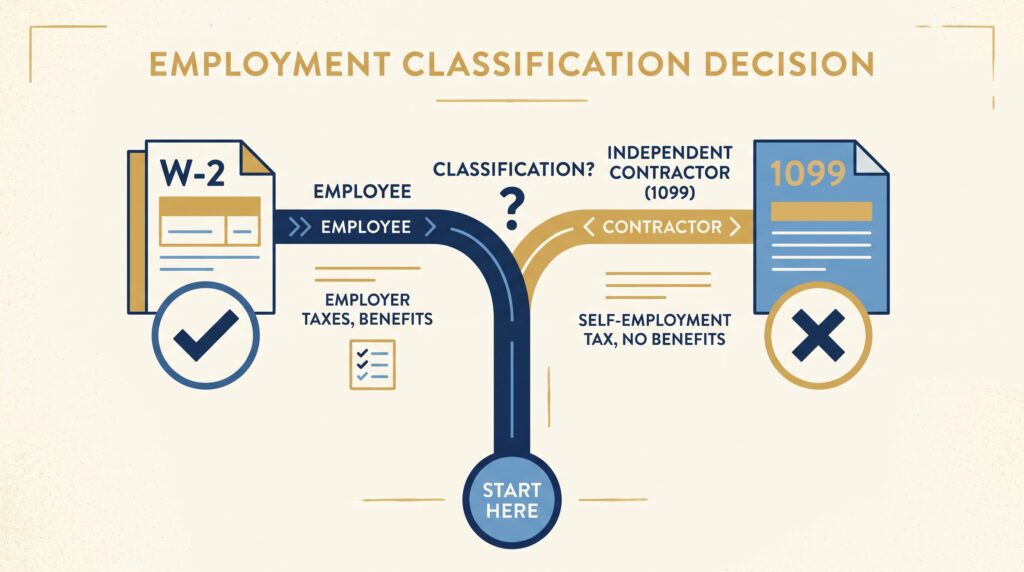
Let’s spoil this down, due to the fact that is exactly where maximum gig employees get tripped up. The deduction only applies in the event that you are a W-2 worker who has been labeled “non-exempt” under the Fair Labor Standards Act – that means your organization is legally required to pay you overtime for 40 more hours per week
If you are a fair contractor, freelancer, or any gig that is profitable through a platform and gets paid on a 1099, you are generally not covered at all using the FLSA overtime rules. That’s actual regardless of how many hours you put in at some stage in a given week. Time beyond regulation cuts only applies to individuals who receive W-2 wages – fair contractors, freelancers, and sole proprietors undoubtedly do not qualify Even if a platform will give you a benefit for operating at some stage during busy times, it doesn’t always legally require overtime, so it doesn’t matter.
There is one small nuance worth flagging here. The IRS has noted that tax law and the FLSA don’t always define “employee” the same way, which means unusual 1099 situations can technically exist. But this is very much the exception, not the rule. If you’re a true independent contractor running your own gig business, it’s safest to assume you don’t qualify unless a tax professional tells you otherwise for your specific situation.
| Factor | W-2, Non-Exempt Employee | 1099 Independent Contractor |
| Covered by FLSA overtime rules | Yes, generally | No |
| Overtime premium can qualify for the deduction | Yes, if legally required | Almost never |
| Where you claim it | Schedule 1-A | Not applicable |
| Tax on overtime earnings | Social Security & Medicare | Self-employment tax |
What Actually Counts as “Qualified” Overtime
Here’s the real question most people actually need answered: how much of your overtime pay counts toward this deduction? Only the premium portion required under Section 7 of the Fair Labor Standards Act – the amount that sits above your regular rate of pay – counts as qualified overtime compensation. In a standard time-and-a-half arrangement, that means only the “half,” not your entire overtime paycheck.
Let’s put real numbers on it. Say your regular hourly rate is $20, and you work overtime hours at $30 an hour. Only the extra $10 per hour — the premium above your regular rate — counts toward the deduction. Not the full $30. If your employer happens to pay double time instead of time-and-a-half, the math shifts a bit: you’d divide your total overtime pay by four (instead of three) to isolate the deductible premium portion.
One more thing worth knowing before you get too far into your own math: voluntary extra pay — things like holiday bonuses, discretionary overtime, or union-negotiated premiums that go beyond what federal law strictly requires – generally doesn’t qualify. The rule here is intentionally narrow. It has to be overtime that the FLSA actually mandates not just extra money your employer chooses to pay you.
How Much You Can Actually Deduct
For tax years 2025 through 2028, eligible workers can deduct up to $12,500 of qualified overtime pay if they are a single filer, or up to $25,000 if they are married and filing at the same time. This is what is called an above-the-line deduction, which is perfect information, as this way you can claim it whether or not you itemize your deduction or just take the normal deduction.
The deduction off evolved begins to phase out once your modified adjusted gross income crosses $150,000 for unmarried filers or $300,000 for joint filers. If your benefit sits above those limits, the amount you’re able to deduct shrinks as your income climbs, and eventually disappears altogether.
And here’s a trap that catches more people than you’d expect: married taxpayers have to file jointly to claim this deduction. It simply isn’t available to anyone filing as married filing separately. If you and your spouse typically file separately for other reasons – maybe as a student loan repayment strategy, or to keep one spouse’s tax debt isolated – you’ll want to weigh that decision carefully against the value of this deduction, because choosing separate returns means giving it up entirely, even if one of you individually earned every dollar of qualifying overtime.
Read Also :- How to Track AI Side Hustle Income for Tax Season
Advanced Wealth Modeling: Strategic Implications for FIRE and Blue-Collar Wealth Building
For workers pursuing Financial Independence, Retire Early (FIRE), the federal overtime tax exemption is a powerful tool to accelerate your wealth building. By keeping your overtime pay tax-free, you avoid the burden of higher marginal tax brackets, allowing you to invest more money sooner.
Let’s take a look at how this changes the numbers for a hybrid employee assembling a W-2 Building process with 1099 AI facet hustle. Suppose a worker has a W-2 base income of $65000 per year, $15,000 per year beyond the regular time earnings of the W-2 (such as 333 hours in a time-half a rate of $forty/hour), and a 1099 AI facet-hustle income of $20,000 corresponding to year.
Total Gross Income = $65,000 + $15,000 + $20,000 = $100,000
Without the exemption, the last $15,000 of overtime pay faces the full force of the worker’s highest tax bracket (22% federal income tax plus self-employment tax obligations on the sidehustle earnings). This leaves the worker with high tax liability and less money to invest. With the exemption active, the $15,000 in overtime earnings is removed from the federal income tax calculation. This makes the worker’s adjusted gross income (AGI) less than $100,000 to $85,000.
Direct Federal Income Tax Savings = $15,000 × 22% = $3,300
By saving $3,300 in cash every single year, this employee can invest those funds all at once Wealth building loans. If you just channel that $3,300 annual tax savings into a low cost index fund The antique within the tax-advantaged account earns an average of 8% annually to go, over a long period of time The impact on your net worth is huge: in a 20-year career, this one tax law can upload $162,000 more to an employee’s retirement portfolio. This is a savings for every person within the FIRE network It can shave years off your timeline for financial independence.
A Closer Look: Two Very Different Workers
Janice, the Hybrid Worker
Jenice is a 34-12 month vintage ICU nurse in Ohio. She works W-2 hours at her hospital and opts for grocery-transportation shifts through a gig app on weekends for a few extra breathing room in her finances. In 2025, she worked enough mandatory overtime at the hospital to earn $6,200 as top rate pay in overtime, which is well documented on her pay stub as FLSA-required time-and-half.
Her weekend delivery earnings – roughly $9,000 for the year – don’t factor into this deduction at all, because the delivery app pays her as an independent contractor, not as an FLSA-covered employee. But her hospital overtime absolutely does qualify. Jenice can deduct that $6,200 in qualified overtime premium from her taxable income using Schedule 1-A, while her delivery income continues to be reported and taxed separately as self-employment income — with its own set of deductions available to her through Schedule C.
Bruce, the Full-Time Gig Worker
Bruch drives full time for the rideshare platform, often installing 55-plus hours per week to hit his profit wishes. When he heard there was “no tax on overtime,” he naturally assumed his long hours behind the wheel might be worth his deduction. They don’t do it. Because gig workers are generally classified as fair contractors, they are not covered by FLSA time use beyond regulation policies and generally do not receive overtime rates in any felony sense – no matter how many hours they log in per week
Bruch’s real chance isn’t this deduction by any means – it ensures he fully uses the deductions that accrue to his rental income: mileage or actual car expenses, qualified business income deductions, and retirement contributions via SEP-IRA or Solo 401(OK), all to meaningfully reduce his self-employment tax burden It turned out it was never going to do for him.
Step-by-Step: How to Claim It on Schedule 1-A
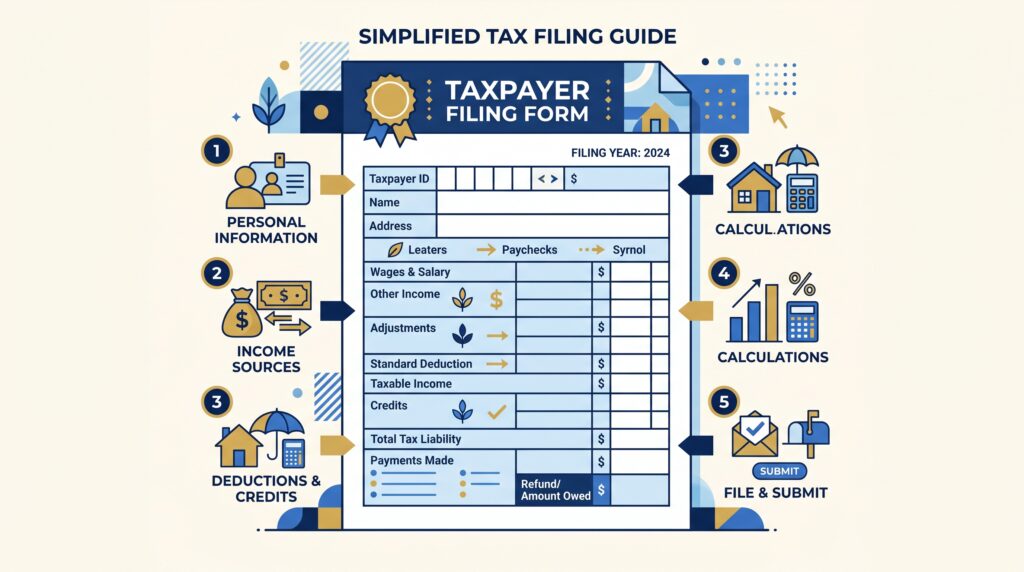
- Confirm that you’re a W-2, FLSA-non-exempt employee who received legally required overtime pay during the tax year.
- Gather your documentation: your W-2 (Box 12, Code TT starting with the 2026 tax year), pay stubs, or a statement your employer has provided showing your overtime breakdown.
- Calculate your qualified overtime premium yourself if it wasn’t separately reported (more on this in the next section).
- Double-check that your filing status is single, head of household, or married filing jointly — not married filing separately.
- Calculate your modified adjusted gross income to see where you land against the phaseout thresholds.
- Complete Schedule 1-A (Form 1040) to calculate and formally claim the deduction.
- Include your Social Security number, valid for employment, on your return – it’s required to claim this deduction.
- Hang on to your supporting pay records in case the IRS ever has questions.
The 2025 Reporting Gap
Here’s something a lot of workers don’t realize until they sit down to file: for tax year 2025, employers weren’t actually required to separately report qualified overtime compensation on W-2s. The law passed partway through the year, and payroll systems needed time to catch up. That means plenty of 2025 W-2s simply won’t have a clean, ready-made number for you to copy down.
If your employer didn’t break the figure out for you, you’ll need to reconstruct it yourself using pay stubs or payroll summaries. The good news is that the IRS allows several reasonable calculation methods for this one-time transition year. And starting with the 2026 tax year, employers are required to report the amount separately using the new Box 12, Code TT on Form W-2 – so this manual math becomes a one-time hassle rather than something you’ll have to redo every year.
Common Mistakes (And What They Actually Cost You)
- Assuming all of your overtime pay is deductible. You can only deduct the premium half, not your full overtime paycheck – overstating this can mean filing an amended return later.
- Claiming 1099 gig income as qualified overtime. It isn’t eligible, and claiming it anyway can draw unwanted IRS attention.
- Filing married filing separately without checking the impact first. This alone can forfeit up to $25,000 of deductible income.
- Ignoring the MAGI phaseout. Higher earners near the $150,000 or $300,000 thresholds often overestimate how much they can actually deduct.
- Not keeping pay stub documentation from 2025. Without records, reconstructing your qualified overtime figure later becomes a much bigger headache.
If You’re 1099 and This Doesn’t Apply to You
If you’ve read all of this and landed on “okay, I don’t qualify” – you’re not out of options, not even close. Self-employed workers have a whole toolkit of deductions that this particular provision was never designed to replace: ordinary and necessary business expense deductions on Schedule C, retirement contributions through a SEP-IRA or Solo 401(k) that can meaningfully cut your taxable income, and the Qualified Business Income deduction depending on your net earnings. This overtime deduction was built for a specific slice of the workforce – hourly, FLSA-covered employees – and your own tax strategy as a 1099 worker should be built around the tools that were actually designed with you in mind.
Conclusion of No Tax on Overtime
The “no tax overtime” coverage is far narrower than the headlines support, clearly focusing on traditional, non-exempt W-2 employees who paint more than 40 hours a week. While qualified people can save up to $12,500 (or $25,000 if married filing together) from taxable income from 2025 to 2028 without the list, self-employed gig workers and freelancers are completely excluded from this exact benefit Written-off, including Schedule C expenses, retirement contributions (SEP-IRA/Solo 401(k)), and qualified business income deductions For those juggling every W-2 beyond regular time and an aspect hand, separate them strictly: Claim your overtime savings on Schedule 1-A, as well Maximize your gig deductions on Schedule C. Don’t allow publicity to distort your tax approach – realize precisely where your earnings fit so you don’t leave money on the table or where it shouldn’t.
FAQs
Does it follow from 1099 gig employees not being taxed in time beyond regulation cuts?
Generally, no. The deduction applies only to overtime required under the Fair Labor Standards Act, which includes W-2 employees. Independent contractors and gig workers are not blanketed through FLSA overtime regulations, so they are not eligible for overtime earnings, regardless of how many hours they work.
How can I deduct the entire portion below the no-tax overtime rule?
Up to $12,500 for single filers or $25,000 for married couples, deductions for tax years 2025 through 2028 end immediately as soon as your modified adjusted gross earnings exceed $150,000 (single) or $300,000 (combined).
Is my entire after-regular paycheck tax-relieved now?
Not only is the top rate portion – generally the greater “half” of time-and-a-half pay – deductible. Your basis beyond regular time pay, along with Social Security, Medicare, and national taxes, will apply traditionally anyway.
What if I actually have a W-2 activity and a facet hustle?
Your W-2 overtime, if FLSA-required, may still qualify for a deduction. Your side income, stated in the 1099 bureaucracy, will not count towards the number and is taxed under the separate self-employment guidelines.
How do I know if I’m “FLSA non-exempt”?
Nonexempt employees are usually hourly employees who are legally entitled to overtime pay. Exempt employees – generally salaried workers in executive, administrative, or specialist roles – are not entitled to FLSA overtime and are not eligible for this deduction Your employer or human resources department can verify your class.
What form do I use to claim the deduction?
Schedule 1-A (Form 1040), which the IRS created specifically for brand-new OBBBA deductions, such as no tax on recommendations, no tax on overtime, and senior deductions.







1 thought on “How to Claim Federal Tax Exemption on Overtime Pay”